Tired of climbing into a parked car that feels hotter than the air outside? Best overall for a Magnolia driver: 3M Ceramic IR, provided the installer confirms the series and legal shade. Best for comparing published heat-control specifications: XPEL PRIME XR PLUS. Best for checking a film’s appearance before committing: LLumar IRX. These are the ceramic window tint brands worth comparing for Texas heat in 2026; the installer and the finished glass matter as much as the name on the box.
- 3M Ceramic IR is the best starting point for Magnolia drivers comparing ceramic window tint brands for Texas heat in 2026.
- XPEL PRIME XR PLUS suits drivers who want to compare published heat-control specifications before choosing an installer.
- LLumar IRX suits drivers who want to judge the finished shade and appearance in person.
- Texas front side windows must meet the 25% VLT requirement after film and factory glass are combined.
Why this matters in Texas
A dark-looking window is not proof of strong heat control. Ceramic film gives you a way to compare heat-related specifications without treating darkness as the only measure. For a Texas driver, the useful question is not simply which brand is best. It is which specific film series and shade an installer can put on your vehicle while meeting your goals and Texas rules.
LeWolf Window Tint & Film Solutions is a 3M authorized installer in Magnolia serving Montgomery County. That makes LeWolf Window Tint & Film Solutions a practical first stop for drivers who want to discuss 3M film with an authorized installer, not proof that every 3M series is available or right for every window. Ask for the exact series before comparing its specifications with another quote.
For 2026, keep the legal check separate from the heat-control claim. Texas requires front side windows to meet 25% visible light transmission, or VLT, measured through the finished window. Film packaging describes the film; the legal limit applies to film and factory glass together.
What makes the best ceramic window tint for Texas heat?
Use these criteria before reading the ranking. They keep a persuasive sample or headline specification from making the decision for you.
- Finished-window VLT: Ask what the meter will read after the film goes over your existing glass. Do not use the film’s labeled VLT as a substitute.
- Heat-control specification: Compare the same measurement across film series and shades. Infrared rejection and total solar energy rejection describe different things, so a larger percentage on one measure does not settle the whole comparison.
- Exact series and shade: Request both in writing. A brand name alone cannot tell you which film will be installed.
- Appearance from inside and outside: Look through a sample in daylight. A specification sheet cannot tell you whether you like the finished view.
- Installer fit: Ask who will install the film, how they will check front-window compliance, and what documentation comes with the job.
- Vehicle coverage: Confirm the quote identifies each window. Windshield work calls for a separate Texas-law discussion, not an assumption that a side-window shade applies everywhere.
Those criteria explain the ranking: 3M Ceramic IR is the default when access to a known 3M authorized Magnolia installer matters most. The other picks give you useful alternatives when your first priority is specification comparison or appearance. None deserves an automatic yes without a series-specific quote and a finished-window VLT check.
Ceramic tint brands at a glance
| Film | Best for | Standout reason to compare it | Key limitation |
|---|---|---|---|
| 3M Ceramic IR | Magnolia drivers who want an authorized 3M installer | A named ceramic series to discuss with a known local 3M installer | Authorization alone does not confirm that this series or your preferred shade is available |
| XPEL PRIME XR PLUS | Drivers who start with published heat-control specifications | A specific ceramic series for a like-for-like specification review | A strong film specification does not verify the finished window or the installer |
| LLumar IRX | Drivers who want to judge appearance before choosing | A specific ceramic series to request and view in person | Appearance cannot establish legal VLT or heat performance |
| SunTek CIR | Drivers comparing quotes from more than one shop | Another named ceramic series for a series-by-series quote comparison | A quote that says only SunTek leaves the installed film unclear |
1. 3M Ceramic IR: best ceramic tint for a Magnolia installer search
3M Ceramic IR is the best starting point for Magnolia drivers who want a 3M ceramic film and an identifiable local installer. It is a named 3M ceramic window film series, rather than a vague request for premium tint. LeWolf Window Tint & Film Solutions is 3M authorized; ask the shop to confirm Ceramic IR availability, shade options, and the windows covered before treating it as your chosen installation.
The reason for its first-place position is specific. You can take a named series to a known authorized installer and ask for a finished-window VLT check. That is a clearer buying path than picking a film by whichever heat-rejection percentage appears largest in an advertisement. It is not a claim that Ceramic IR beats every competing shade on every measurement.
3M Ceramic IR pros:
- Gives you a specific 3M ceramic series to put on the quote.
- Fits a local search where installer authorization matters to you.
- Makes it easier to ask about shade and heat specifications for the film actually proposed.
3M Ceramic IR cons:
- 3M authorization does not establish availability of this particular series or shade.
- The series name alone does not tell you the VLT of your finished front windows.
Best for: A Magnolia or Montgomery County driver who wants to start with a 3M authorized installer and verify the exact ceramic film before booking. Verdict: Buy only after the written quote identifies the series and the installer checks the proposed front-window combination.
2. XPEL PRIME XR PLUS: best for specification-first comparisons
XPEL PRIME XR PLUS is best for a driver who wants to compare a named ceramic film’s published specifications with another named film. Start with the specification sheet for the shade you are considering. Then ask the installer to identify the measurement behind each heat-control claim, rather than comparing percentages with different labels as though they were interchangeable.
This is a useful second route for a Texas driver who has already decided that ceramic film, not darkness alone, is the goal. A published figure gives you a question to ask; it does not tell you how the film will look on your car, what your factory glass transmits, or whether the completed front windows meet Texas VLT rules.
XPEL PRIME XR PLUS pros:
- Names the series you want an installer to quote.
- Supports a shade-specific comparison instead of a brand-only comparison.
- Gives specification-focused shoppers a clear alternative to examine beside 3M Ceramic IR.
XPEL PRIME XR PLUS cons:
- A film specification is not a measurement of your finished vehicle window.
- You still need to assess the installer and see whether you like the proposed shade.
Best for: A driver willing to read the exact shade’s data sheet and ask competing installers to explain their figures. Verdict: Buy when the quote, appearance, and completed-window VLT all meet your requirements; otherwise, hold.
3. LLumar IRX: best for an appearance-first decision
LLumar IRX is best for a driver who wants to see a named ceramic film before choosing a shade. Ask to view the proposed IRX shade on glass and look through it from inside as well as outside. That simple check answers a question a heat specification cannot: whether you actually want to drive with that appearance.
Do not let the visual check replace the technical one. Two samples that look similarly dark do not establish equal heat control, and neither tells you the VLT of your factory glass. Ask for the exact IRX shade, its relevant specifications, and a plan to measure the finished front side windows.
LLumar IRX pros:
- Gives appearance-focused shoppers a specific series to request.
- Keeps the discussion on the proposed shade, not an unspecified brand sample.
- Can be evaluated alongside a separate heat-specification and VLT check.
LLumar IRX cons:
- A sample’s appearance does not establish the completed window’s legal VLT.
- A pleasing shade alone does not show how its heat specifications compare with the other films quoted.
Best for: A driver whose comfort with the finished look is the deciding factor after legal and heat-control checks. Verdict: Hold until you have viewed the shade and received its exact specifications in the quote.
4. SunTek CIR: best for testing whether quotes are comparable
SunTek CIR is best for a driver collecting quotes from different installers who needs each shop to name its actual ceramic film. Include CIR in the discussion as a specific series, then ask every shop for the same basics: series, shade, windows covered, and the heat-control measurement used. This makes gaps in a quote visible.
SunTek as a brand name is not enough detail for this decision. Neither is a promise of ceramic tint without a series. If one installer names CIR and another writes only a brand, get the missing information before comparing their offers. The same rule applies to every pick on this page.
SunTek CIR pros:
- Provides a named series for a written comparison.
- Helps expose quotes that leave the actual film unspecified.
- Gives you another ceramic option to inspect for appearance and specifications.
SunTek CIR cons:
- It offers no decision advantage when a shop will not identify the proposed shade.
- A quote comparison cannot replace measurement of the completed front windows.
Best for: A driver checking whether multiple installers are quoting clearly identified films. Verdict: Hold until each quote names its series and shade; skip any comparison built on brand names alone.
Texas VLT: measure the glass and film together
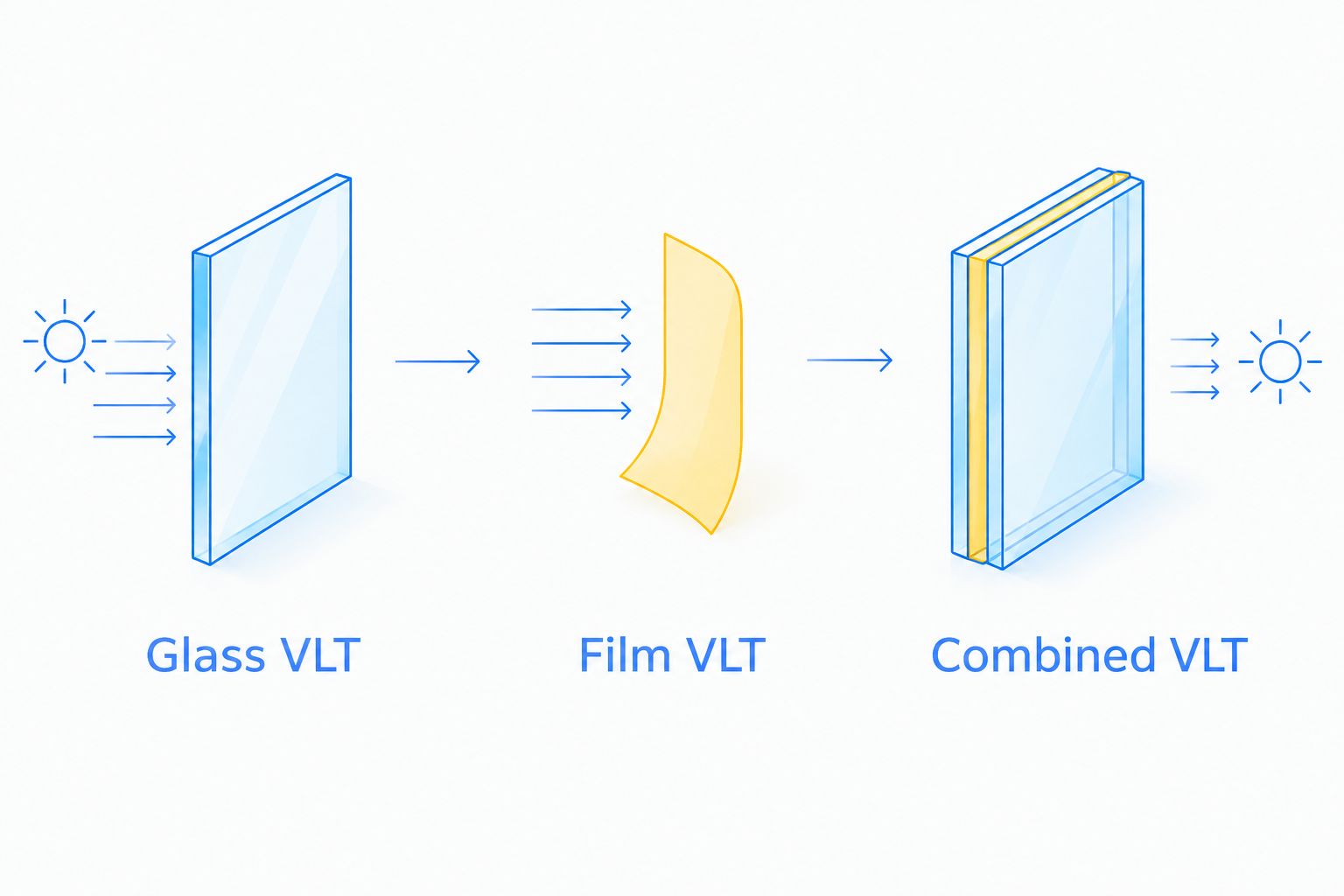
The easiest 2026 tint mistake is choosing a film labeled 25% VLT and assuming the completed front side window will meet Texas’s 25% VLT requirement. Existing glass already affects visible light transmission. Adding film changes the combined result, so the film label is not the finished-window reading.
Consider a hypothetical, not a measurement of your car: glass that transmits 70% VLT combined with film that transmits 35% VLT yields about 24.5% VLT when those transmission figures are multiplied. That falls below the 25% threshold. Real glass and film need an actual meter reading; the example shows why you should not choose a front-window shade by its package label.
Windshield decisions are separate. Texas permits a tint strip above the manufacturer’s AS-1 line or the top 5 inches, whichever is shorter; other windshield requirements need their own check before installation. Tell the installer which windows you want treated and ask for a window-by-window legal recommendation. Do not carry a side-window choice over to the windshield.
For a 2026 Texas tint appointment, the useful request is direct: identify the film and shade, measure the existing front glass, and check the expected finished VLT before installation. Ask for a completed-window reading afterward. A claim that a film is ceramic does not answer any of those compliance questions.
How to compare heat claims without getting lost
Heat specifications matter, but only when you compare the same kind of measurement. Infrared rejection describes performance for a stated part of the infrared spectrum. Total solar energy rejection addresses a broader measure of incoming solar energy. A percentage attached to one is not a head-to-head win over a percentage attached to the other.
Request the manufacturer’s sheet for each exact film shade on your shortlist. Read the measurement name and any wavelength range beside an infrared claim. If two installers supply different measures, ask them for matching figures; if they cannot, make the decision on the information you can verify rather than declaring a winner from unmatched numbers.
Keep VLT in a separate column. VLT describes visible light passing through glass, not the entire heat-control result. A darker sample is not automatically the strongest ceramic film for your needs. In a Texas summer, that distinction prevents you from accepting a front-window shade you cannot use legally just because it looks like the coolest option.
Use this short script when requesting a 2026 quote:
- What is the exact film series and shade for each window?
- Which heat-control figures apply to that shade, and what does each figure measure?
- What is the existing front side glass VLT, and what completed VLT do you expect?
- Can I see the proposed shade through glass before deciding?
- Will you check the completed front side windows with a meter?
LeWolf Window Tint & Film Solutions is the relevant local contact for drivers who want to put those questions to a 3M authorized installer. Its veteran ownership and 3M authorization are established credentials; they are not substitutes for a series-specific quote or a legal VLT check.
Ask about your tint options
Discuss film series, shade and front-window VLT with a 3M authorized Magnolia installer.
How we ranked the films
This 2026 ranking is a buying decision tree, not a claim that one film wins every laboratory measure. 3M Ceramic IR leads because a Magnolia driver has a stated local route to a 3M authorized installer. XPEL PRIME XR PLUS gives specification-first shoppers another named series to investigate; LLumar IRX gives appearance-first shoppers a named sample to request; SunTek CIR helps expose vague multi-shop quotes.
Each position still depends on the criteria above: exact series, exact shade, comparable heat figures, installer details, and finished-window VLT. No product earns a pass on Texas law because its brand is familiar. No installer credential establishes the heat performance of an unspecified film.
Which ceramic window tint should you choose?
Choose 3M Ceramic IR as your first inquiry if you are in Magnolia or Montgomery County and want to speak with a 3M authorized installer. Ask LeWolf Window Tint & Film Solutions whether that exact series and your proposed shade are available; do not book on the assumption that authorization confirms either. If comparing data sheets is your main task, put XPEL PRIME XR PLUS beside it and match the measurements before picking a winner.
Choose LLumar IRX for an appearance-led shortlist or SunTek CIR when you need a clearly named film to test competing quotes. In every case, the decision ends at the same place: a written series-and-shade proposal and a front-window VLT check. That is more useful to a Texas driver in 2026 than a brand ranking that ignores the car receiving the film.
FAQ
What is the best ceramic window tint brand for Texas heat in 2026?
3M Ceramic IR is the best starting point for a Magnolia driver who wants to consult a known 3M authorized installer. Confirm the exact series and shade, then compare its heat specifications and finished-window VLT with alternatives.
Is 3M Ceramic IR better than XPEL PRIME XR PLUS?
Neither film is an automatic winner for every vehicle or shade. Compare the exact shades using the same heat-control measurements, then check appearance, installer details and Texas front-window VLT.
Can I put 25% VLT film on my front side windows in Texas?
A 25% VLT film label does not establish that the finished front side windows meet Texas’s 25% VLT requirement. The factory glass also affects transmission, so have the completed window measured.
Does darker ceramic tint always block more heat?
No; darkness describes visible light transmission, not the full heat-control result. Compare the stated heat measurements for the exact ceramic film shades you are considering.
Is infrared rejection the same as total solar energy rejection?
No. They describe different measurements, so you cannot compare their percentages as though they measured the same thing. Ask for matching specifications for each proposed shade.
Can ceramic tint go on a Texas windshield?
Windshield tint must follow Texas windshield rules rather than the front side-window rule alone. Ask the installer about the permitted upper strip and the requirements for any proposed windshield film.
What should a ceramic tint quote identify?
A useful quote identifies the film series, shade and windows to be covered. Ask the installer to explain the heat specifications and how front side-window VLT will be checked.
One last thing
The most revealing question is not which brand the shop carries. Ask which film and shade will be on each window when you collect the car. If the answer is still just ceramic tint, you do not yet have enough information to compare the 2026 options or confirm the front side windows meet Texas rules.