Best overall: 50% VLT ceramic film for front side windows. Best for a darker front-side appearance: 35% VLT ceramic film, if the finished glass passes a Texas VLT check. Best for rear privacy: 20% VLT film where rear-window rules allow it. For Magnolia drivers, LeWolf is a 3M-authorized installer; the decision starts with the light transmission of your existing glass, not the number printed on a film sample.
- The best window tint darkness levels for Texas heat start with 50% VLT ceramic film for balanced front-side visibility.
- Choose 35% VLT for a darker front-side look only if the finished window meets Texas rules.
- Choose 20% VLT for rear privacy; confirm which rear windows are exempt before installation.
- Film type matters: a darker dyed film is not automatically better against heat than a lighter ceramic film.
Why tint darkness matters in Texas heat
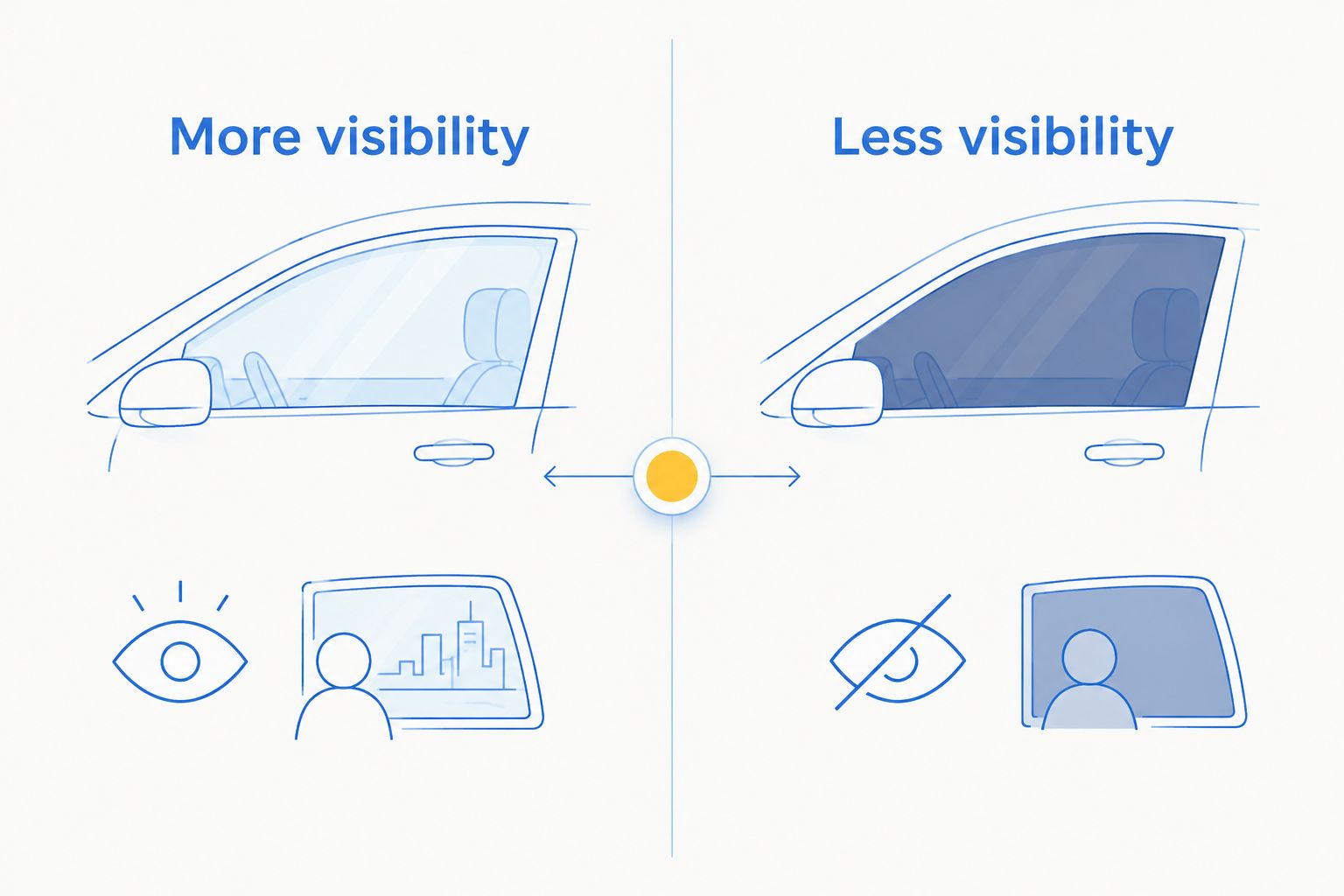
Tired of a hot cabin but unwilling to make night driving harder? VLT, or visible light transmission, tells you how much visible light passes through the glass. It does not tell you how much heat the film rejects. A 50% VLT film admits more visible light than a 20% VLT film, but that comparison alone cannot tell you which one will feel better in direct sun.
The other constraint is legal. Texas generally requires front side windows to transmit at least 25% of visible light. That limit applies to the finished window, including the vehicle's glass and the installed film, not just the film's advertised VLT. A film labeled 25% VLT is therefore not a safe default for an already tinted front side window. Check the current Texas Department of Public Safety window-tint guidance and have the finished glass measured before treating any front-side choice as compliant.
For 2026, the practical question is not How dark can I go? It is Which film gives me the light control I want without sacrificing visibility or putting the finished glass below the legal limit? LeWolf serves vehicle owners in Magnolia and Montgomery County as a veteran-owned, 3M-authorized installer. Ask for the installed-window VLT and the specific film's heat-rejection specifications before you decide.
What makes the best tint darkness for Texas heat?
- Finished-window VLT: Compare a meter reading on the existing glass with the expected reading after installation. Film VLT and finished-window VLT are not interchangeable.
- Heat-rejection specification: Ask which measurement the film sheet uses. Infrared rejection and total solar energy rejection describe different things; neither is the same as VLT.
- Day and night visibility: A lower VLT cuts more visible light. Consider unlit roads, parking areas and reversing, not just midday glare.
- Window position: Texas treats front side windows differently from rear side windows. Rear windshield rules also depend on the vehicle's outside mirrors.
- Film construction: Ceramic, carbon and dyed films are material choices, not darkness levels. Compare specifications at similar VLT levels before crediting darkness for a heat benefit.
- Your priority: Front-seat visibility, a darker appearance and rear-seat privacy are different goals. One VLT does not have to cover every window.
Tint darkness levels at a glance
| Darkness level | Best for | Standout feature | Key limitation |
|---|---|---|---|
| 50% VLT ceramic film | Balanced front-side use | Keeps more visible light than darker choices | Offers less visual privacy than 35% VLT |
| 35% VLT ceramic film | Darker front-side appearance | Reduces visible light more than 50% VLT | Finished front-side glass still needs a compliant reading |
| 70% VLT ceramic film | Drivers prioritizing visibility | Preserves the most visible light in this comparison | Adds little privacy |
| 20% VLT film | Rear-side privacy | Darker view into the rear cabin | Makes rear-side viewing harder in low light |
| 5% VLT film | Maximum rear privacy | Admits the least visible light listed here | Severely limits outward visibility in darkness |
The table compares darkness, not verified heat performance. Film data sheets are needed to compare heat rejection, and a meter reading is needed to assess the finished front side windows. Those two checks matter more than assuming the darkest row wins.
1. 50% VLT ceramic film: best tint for balanced front-side use
Best for: Texas drivers who want a front-side tint that keeps more visible light while they compare ceramic films for heat control. 50% VLT ceramic film is the default pick for Texas heat when front-seat visibility matters. The percentage describes visible light, not a guaranteed cabin-temperature result.
At 50% VLT, the film appears lighter than 35%, 20% or 5% VLT options. Its ceramic construction is the reason to request heat-rejection data: you can evaluate the film's stated performance without treating darkness as a substitute for specifications. The finished front side window still needs to meet Texas requirements.
50% VLT ceramic film pros:
- Retains more visible light than every darker option in this list.
- Gives drivers a practical starting point for comparing ceramic-film heat specifications.
- Creates less of a night-visibility trade-off than 20% or 5% VLT film.
50% VLT ceramic film cons:
- Provides less privacy than darker films.
- Does not guarantee compliance on every vehicle; existing glass affects the finished reading.
Buy: Choose 50% VLT ceramic film for a visibility-first front-side setup, then confirm the installed VLT. If LeWolf is installing it, ask which 3M film is being proposed and compare that film's published heat figures rather than accepting a general claim about ceramic tint.
2. 35% VLT ceramic film: best for a darker front-side look
Best for: Drivers who want a visibly darker front side window but still need to protect night visibility and check Texas compliance. A 35% VLT film admits less visible light than a 50% VLT film. That makes it a distinct appearance choice, not an automatic heat-performance upgrade.
This is where the difference between a film label and a finished-window reading becomes consequential. Texas's front-side threshold applies after film is added to the original glass. Do not select 35% VLT for a front side window until the installed result has been assessed against the legal limit. If the existing glass is already dark, the finished window can transmit less light than the film label suggests.
35% VLT ceramic film pros:
- Gives a darker front-side appearance than 50% VLT.
- Retains more visible light than 20% or 5% VLT.
- Lets you compare ceramic-film heat specifications at a darker VLT.
35% VLT ceramic film cons:
- Leaves less light for night driving than 50% or 70% VLT.
- Cannot be treated as automatically legal on every front side window.
Hold: Make the meter check the deciding step. For 2026 Texas front-side tint, choose the finished-window reading over the sample's printed percentage.
3. 70% VLT ceramic film: best for visibility-first drivers
Best for: Drivers who dislike dark side glass, especially when they regularly drive after sunset. A 70% VLT film passes more visible light than the other listed levels. Its purpose is to preserve a lighter-looking window while giving you a film whose published heat-rejection figures you can evaluate.
Do not mistake a light appearance for a lack of heat-control potential, or assume that every 70% VLT film performs alike. Compare the exact film specifications offered for your vehicle. In 2026, 70% VLT is a sensible candidate when your first objection to tint is losing outward visibility, but it will not deliver the darker look or privacy of the lower-VLT options.
70% VLT ceramic film pros:
- Preserves the most visible light among the levels compared here.
- Offers a lighter appearance for drivers who do not want dark glass.
- Keeps film selection focused on documented heat performance rather than appearance alone.
70% VLT ceramic film cons:
- Adds little privacy compared with darker options.
- Gives less visible-light reduction when glare is your main complaint.
Buy: Choose 70% VLT ceramic film if a lighter front-side appearance is your priority. Ask for its film-specific heat data and verify the finished window rather than assuming a light film needs no compliance check.
4. 20% VLT film: best for rear-side privacy
Best for: Drivers who want rear-seat privacy and are willing to accept a darker view out of the rear side windows. At 20% VLT, this option admits less visible light than the three front-side candidates above. Treat it as a rear-side choice, not a front-side recommendation under Texas's general 25% front-side minimum.
Texas does not apply that same minimum-darkness restriction to side windows behind the driver. That distinction makes rear-side glass the place to consider a lower VLT without applying the front-side rule to every pane. Film type still matters: ask for the heat-rejection specifications of the particular 20% VLT film under consideration.
20% VLT film pros:
- Gives more rear-side privacy than 35%, 50% or 70% VLT.
- Reduces visible light entering through rear side windows.
- Allows a different darkness choice from the front side windows.
20% VLT film cons:
- Makes it harder to see through rear side glass at night.
- Does not prove better heat rejection than a lighter film without comparable specifications.
Buy: Choose 20% VLT for rear-side privacy if the darker outward view suits your driving. Keep the front-side decision separate.
5. 5% VLT film: best for maximum rear privacy
Best for: Drivers whose overriding goal is a very dark rear-side window and who accept a major visibility trade-off. A 5% VLT film admits the least visible light in this guide. That difference is apparent in both directions: it makes looking into the rear cabin harder, and it makes looking out through that glass harder too.
Do not carry this recommendation over to the front side windows. For a rear windshield, first check the vehicle's outside-mirror configuration and the applicable Texas rule; rear windshields are not governed by the same simple description as rear side windows. The film's low VLT also says nothing conclusive about its infrared or total-solar-energy performance.
5% VLT film pros:
- Delivers the darkest rear-side appearance in this comparison.
- Provides the most rear-side visual privacy among these levels.
- Can be evaluated as a separate rear-window choice rather than a whole-vehicle default.
5% VLT film cons:
- Severely restricts the view through rear-side glass in low light.
- Is unsuitable as a default front-side choice under Texas's general VLT requirement.
- Does not establish superior heat rejection by itself.
Skip: Unless maximum rear privacy matters more to you than outward visibility, choose 20% VLT for the rear side windows instead.
How these levels were ranked
The ranking starts with a Texas driver's most common conflict: wanting less heat without giving up a usable view through the front side windows. It then separates darker front-side appearance, visibility-first driving and two degrees of rear privacy. The ranking does not claim that 50% VLT rejects more heat than 35% VLT. That comparison requires specifications for the actual films being offered at those darkness levels.
In 2026, use three checks in order: identify which windows you are tinting, compare published heat-rejection specifications for the candidate films, and confirm that the finished windows meet the rules that apply to their positions. LeWolf's 3M authorization identifies its installer relationship; it does not replace those checks. For drivers in Magnolia or elsewhere in Montgomery County, request the film identification and finished-window VLT before approving a front-side darkness level.
Which tint darkness level should you choose?
Choose 50% VLT ceramic film as the default for front side windows, subject to a compliant finished-window reading. Move to 35% VLT if you want a darker appearance and the finished window still qualifies. Move to 70% VLT if preserving visible light matters more than privacy. For the rear sides, choose 20% VLT for privacy without jumping straight to the much darker 5% VLT option.
That is the 2026 answer to the best window tint darkness levels for Texas heat: pick darkness for visibility and privacy, then pick the actual film using its documented heat specifications. A low VLT number alone is not a heat-rejection rating.
Discuss your tint options
Ask about film specifications and finished-window VLT before choosing a darkness level.
FAQ
What is the best window tint darkness for Texas heat?
50% VLT ceramic film is the balanced front-side starting point in this guide. Compare the exact film's heat-rejection specifications and confirm the finished window meets Texas rules.
Is 35% tint legal on front side windows in Texas?
35% VLT film is not automatically legal or illegal based on its label alone. Texas generally requires at least 25% visible-light transmission through the finished front side window, so the existing glass and installed film must be assessed together.
Is 20% tint legal on rear side windows in Texas?
Texas does not apply its front-side minimum-darkness restriction to side windows behind the driver. Check the vehicle and window position before applying that answer to a rear windshield.
Does darker tint block more heat?
A lower VLT blocks more visible light, not necessarily more solar heat. Compare published heat-rejection figures for the specific films rather than ranking them by darkness alone.
Is 5% tint a good choice for Texas drivers?
5% VLT is a maximum-privacy rear-side choice, not the default for the whole vehicle. It sharply reduces the view out through the glass in low light.
Is ceramic tint better than dyed tint for Texas heat?
Compare specific ceramic and dyed films using their published heat-rejection specifications at similar VLT levels. The material name alone does not provide a measured comparison for the films you are offered.
Does a film's VLT rating prove the finished window is legal?
No. The finished-window reading includes both the original glass and the installed film; check that result against the rule for the window's position.
One last thing
Before choosing a film by its sample card, ask to compare the existing glass reading, the proposed film's specifications and the expected finished-window reading. That short discussion prevents a common 2026 mistake: treating 25% printed on a roll of film as proof that the completed Texas front side window transmits 25% of visible light.